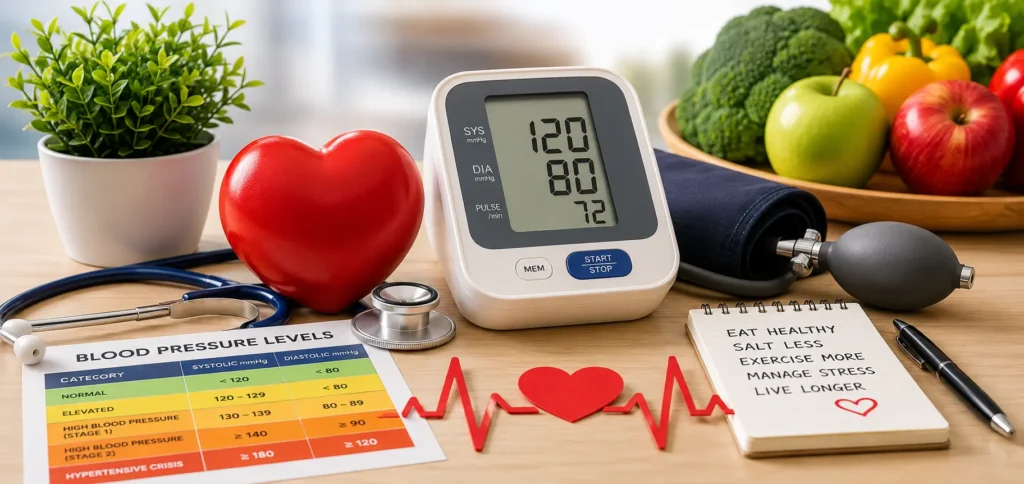
If you are searching for the Best Hypertension Doctor in Mathura, you need a physician who can accurately diagnose the cause of high blood pressure, evaluate associated health risks, and provide personalised treatment plans. Whether your blood pressure is newly diagnosed, uncontrolled despite medication, or associated with diabetes, kidney disease, or heart conditions, timely consultation can help prevent long-term complications.
High blood pressure (Hypertension) is often called the “Silent Killer” because it usually develops without noticeable symptoms but can significantly increase the risk of heart attack, stroke, kidney disease, and other serious health complications. Early diagnosis, regular monitoring, lifestyle modifications, and appropriate medications are essential to keep blood pressure under control.
At Amar Health care, our experienced specialists offer complete hypertension care, including blood pressure monitoring, ECG, echocardiography, laboratory investigations, lifestyle counselling, medication management, and long-term follow-up.
Hypertension, commonly known as high blood pressure, is a medical condition in which the force of blood pushing against the walls of the arteries remains consistently higher than normal. Over time, uncontrolled high blood pressure can damage blood vessels and increase the risk of serious health problems such as heart disease, stroke, kidney disease, and vision loss.
Because hypertension often develops without noticeable symptoms, it is commonly referred to as the “Silent Killer.” Many people may have high blood pressure for years without realizing it. Regular blood pressure check-ups are essential for early diagnosis and timely treatment.
Blood pressure is measured in millimeters of mercury (mmHg) and is recorded as two numbers:
Maintaining a healthy blood pressure through a balanced diet, regular physical activity, stress management, and appropriate medical care can significantly reduce the risk of long-term complications.
If you are searching for the Best Hypertension Doctor in Mathura, you need a physician who can accurately diagnose the cause of high blood pressure, evaluate associated health risks, and provide personalised treatment plans. Whether your blood pressure is newly diagnosed, uncontrolled despite medication, or associated with diabetes, kidney disease, or heart conditions, timely consultation can help prevent long-term complications.
At Amar Healthcare, our experienced specialists offer comprehensive hypertension care, including blood pressure monitoring, ECG, echocardiography, laboratory investigations, lifestyle counselling, medication management, and long-term follow-up.
| Blood Pressure Category | Systolic (mmHg) | Diastolic (mmHg) | What It Means |
|---|---|---|---|
| Normal Blood Pressure | Less than 120 | Less than 80 | Your blood pressure is within the healthy range. |
| Elevated Blood Pressure | 120–129 | Less than 80 | Lifestyle changes can help prevent hypertension. |
| Stage 1 Hypertension | 130–139 | 80–89 | Medical evaluation is recommended. |
| Stage 2 Hypertension | 140 or Higher | 90 or Higher | Requires medical treatment. |
| Hypertensive Crisis | 180 or Higher | 120 or Higher | Seek emergency medical care immediately. |
If you are looking for an experienced doctor for high blood pressure management in Mathura, Dr. Sanjay Sood at Amar Health care provides comprehensive evaluation, diagnosis, and long-term treatment for hypertension. He focuses on identifying the underlying causes of high blood pressure and creating personalised treatment plans to help patients reduce the risk of heart disease, stroke, and kidney complications.
A normal blood pressure reading is generally less than 120/80 mmHg. Readings between 120–129/<80 mmHg are considered elevated, while persistent readings of 130/80 mmHg or higher may indicate hypertension and should be evaluated by a doctor.
In most cases, hypertension cannot be permanently cured, but it can be effectively managed through lifestyle changes, regular monitoring, and medications when prescribed. Maintaining a healthy weight, eating a balanced diet, exercising regularly, and limiting salt intake can help keep blood pressure under control.
To evaluate high blood pressure and identify possible underlying causes, your doctor may recommend:
People with hypertension should limit or avoid:
A diet rich in fruits, vegetables, whole grains, lean proteins, and low-fat dairy products is generally recommended.
A leading multispeciality hospital in Mathura, provides expert doctors, modern facilities, and patient-focused healthcare.
Copyright @2026, All Rights Reserved | Created & Designed By Shreshtha Consultancy Services Pvt. Ltd.